

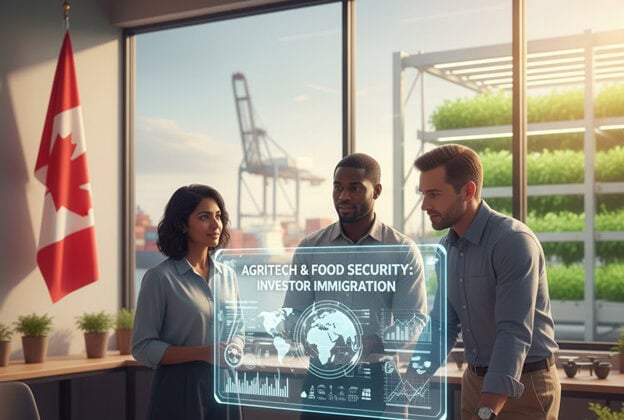
The sectors of agritech and food security have become crucial in a world with a rising population and more difficult climate conditions. The government has recognized the importance of sustainable agriculture and is boosting foreign investment through immigration programs targeted to this end. Investors have a rare opportunity to pursue their agricultural business in line with global immigration pathways. Business Immigration Visas assists entrepreneurs in getting support through the specialized investor visa programs.
Why Agritech Is a Strategic Focus for Investor Immigration
The main reason for agritech is long-term food security, not simply modernizing farm work. Technologies like precision farming, vertical agriculture, and eco-friendly supply chains are being used globally. To appeal to countries like Canada, Australia, and New Zealand, the visa programs have been set up so that innovators can come and work in the agricultural sector, which still needs some changes.
Investing in agritech not only opens the door to permanent residency but also allows investors to be part of local economies and food security projects. The food security investor visa program is one designed to grant visas to businesses working in sustainable agriculture, bio-farming, and creative food solutions.
Food Security and Immigration Policies: What Investors Need to Know
Countries are offering immigration incentives based on strategic sectors that address their needs, and food security is among them. The investor visas granted in those countries usually require a minimum investment in an agritech project, proof of innovation, and a business plan demonstrating the project’s long-term economic impact.
Having experience in agriculture, technology, or food production is a huge plus for applicants, as it can help them increase their chances of advancing through the process. Investors can position themselves to meet the requirements and, at the same time, the industry’s needs by knowing these criteria well.
Structuring Your Agriculture Business for a Successful Visa Application
Investment in the immigration program for an agriculture business should be made by focusing on the following areas:
- Innovation: Highlight technological aspects or the sustainability of your agribusiness.
- Economic Impact: Indicate the number of jobs your business will create or the increase in local agricultural output.
- Compliance: Make sure your business plan follows the laws and regulations in your chosen country.
- Scalability: Show the possibility of growth and contribution to the sector over the long term.
The process can be simplified if you work with the professionals from Business Immigration Visas. The consultancy services help in the investment structuring, the documentation preparation, and the presentation of a strong case for the investor visa approval.
Success Stories of Agritech Investor Migrants
Permanent residency is already a reality for some entrepreneurs who have successfully used agritech investments. An example of this is a startup company that is trying to introduce vertical farming technology in rural Australia received not only a food security investor visa but also the local government support for the expansion of its activities. The above-mentioned cases not only stress the fact that the alignment of business objectives with the strategic sectors is a win-win situation in terms of profits and success in immigration.
Conclusion
Working in the areas of agritech and food security does not mean just opening more business opportunities—it also means having a global residency avenue. The investors’ focus on sustainable agriculture, innovation, and strategic impact will allow them to access the agritech-based investment immigration schemes for permanent residency in the countries that actively promote these sectors.
Business Immigration Visas are there to help entrepreneurs go through the complicated programs, establishing the location of their agritech ventures for both commercial and immigration success. For investors aiming to mix business development with the freedom to move around the world, agritech and food security will be the big opportunity in 2025 and beyond.


