

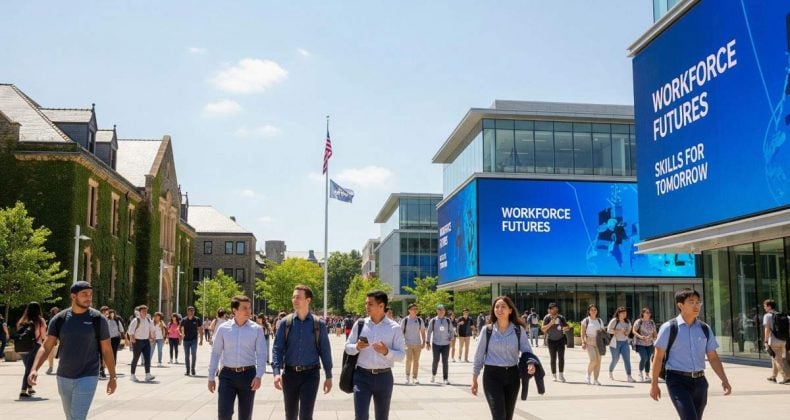
Harvard University to reportedly pay $500 million to workforce programs to end White House dispute. The objective: recover $2+ billion in frozen federal funds. If finalized, the deal could become one of the most talked-about moves in the history of the US job training program.
Why Harvard Is Paying – and Not as a Fine
- This is not a traditional penalty.
- The $500 million would be spent on workforce training, not in government coffers.
- Harvard has repeatedly refused to pay direct fines over and over again, unlike Columbia University.
The settlement talks follow accusations against Harvard ranging from antisemitism handling to diversity, equity, and inclusion (DEI) practices, admissions processes, and even international student policies.
The Bigger Picture: Where Politics And Education Collide
What began as campus protests soon evolved into a wide political fight. The Trump administration is explicit:
- Shift funding toward vocational and technical training.
- Reduce reliance on traditional academic pathways.
- Leverage workforce development as an economic and cultural foil to elite university culture.
Last month, Brown University committed a $50 million, 10-year workforce training commitment in Rhode Island. Harvard’s is ten times that — sufficient to finance thousands of vocational training places.
What Makes This Negotiation Different
Harvard’s potential deal:
- No federal monitor to oversee the university, unlike Columbia.
- Concentrate on maintaining independence, yet fulfilling staff financing needs.
- Maybe an enforcement mechanism is still up in the air.
Trump has threatened other actions, such as revoking Harvard’s tax exemption and banning international students from enrolling. These are high-stakes negotiations — the type that can redefine the higher education landscape for decades.
Why This Matters Beyond Harvard
The administration’s labor priority may impact
- How federal money is allocated across universities.
- The expansion of vocational and trade programs across the country
- The tension between academic prestige and vocational training.
Even international students are taking notes. Changes in U.S. education policy impact study choices, financing, and visas. It’s also why many rely on expert advice from USA business visa consultants in Delhi to navigate complex entry rules.
Conclusion
If this deal goes through, Harvard is about to invest more into job training than any other U.S. university in recent memory. But it won’t wipe out all disagreements with the administration. The political, cultural, and academic tensions are far from over.
For international students, professionals, and businesses, these shifts do matter. Expert US visa consultants in Delhi, like Business Immigration Visas, help clients understand shifting U.S. policies, visa pathways, and opportunities — whether for study, work, or investment. Our advice guarantees you can look ahead — even when the education world shifts overnight.
Because in today’s America, even the oldest institutions are getting schooled — and $500 million is quite the tuition fee.


